Same Building, Similar Layout, 16 Nights vs 3: How to Find Why One Airbnb Listing Out-Books Its Twin
Two near-identical Airbnb units, very different bookings? Treat the twin as a free experiment: find the losing stage, compare side by side, change one thing.
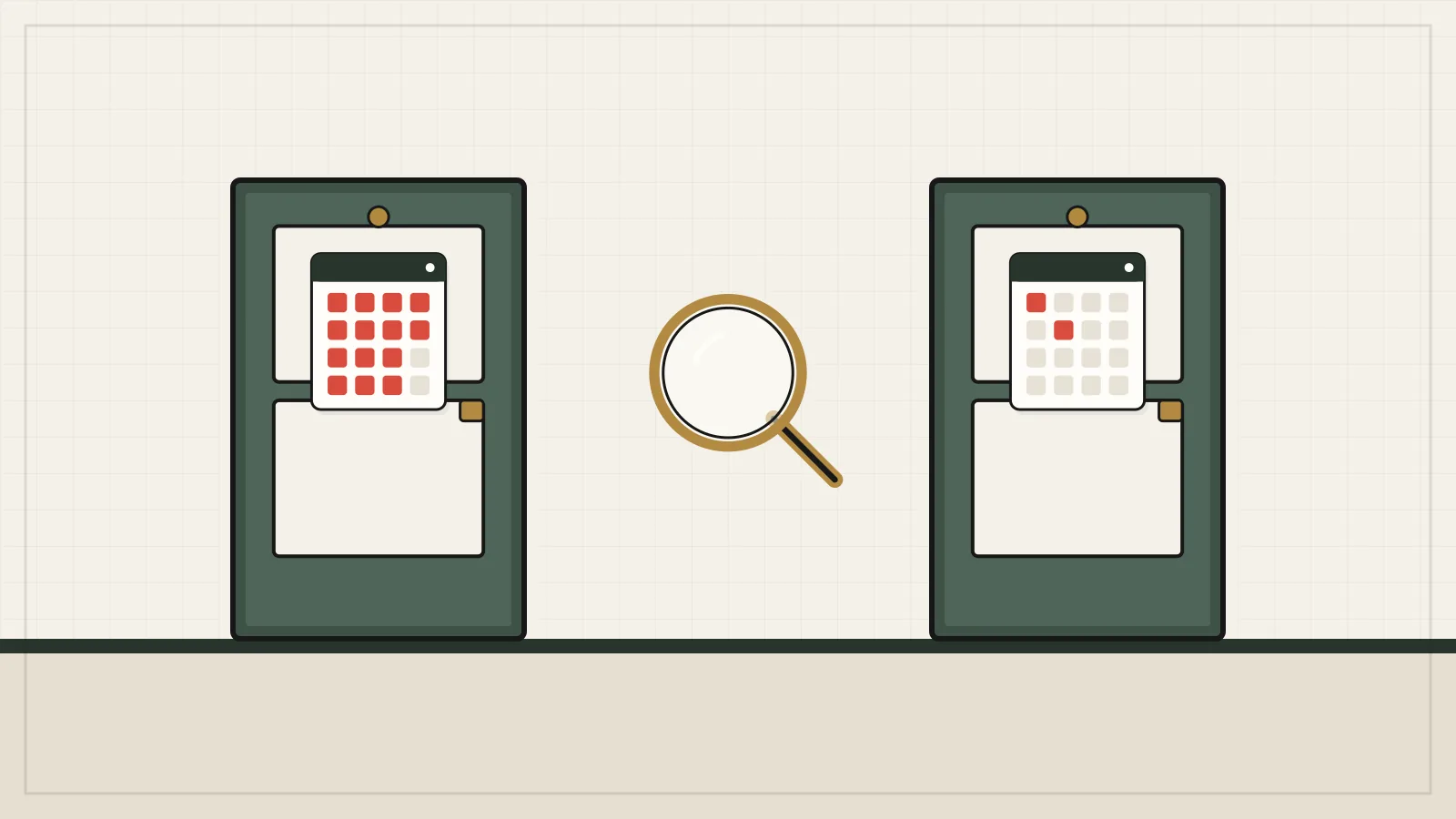
When two of your units share a building, a parking lot and a layout, and one books four or five times more nights than the other, you have something most hosts never get: a free experiment. Most of what could explain the gap is already held constant. What is left is mostly the listing itself, plus a few things guests experience on arrival. Here's how to find which one it is this week.
What does a twin gap look like?
Here is a real one, posted on AirHostsForum on Nov 2, 2026 by a team running 7 apartments. Four of their units sit in one building. In the poster's words: "one gets 400+ views and 16 nights booked in November, another 3 nights. Same parking, similar layout." Their question: "Besides cover photo and title, what usually explains that gap?"
Be clear about what that evidence is. The thread had no replies when we read it, and every number in it is the poster's own, not verified. Across the whole portfolio, the poster describes a Performance-tab picture plenty of hosts will recognize: "Views higher than similar listings, conversion about equal, nightly rate ~RM72 lower," and still occupancy of "43% vs 64%." Their summary: "Guests clearly look, but stay short and book late."
We are not going to tell you why their units differ. Nobody can from one post. What we can give you is the order to check things in.
Step 1: Which stage is the weak unit losing at?
Start in the Performance tab, not in the photos. Airbnb's Help Center article on performance data for conversion (article 2714) splits conversion into three stages:
- First-page search impressions: "A guest views your listing in search, sometimes on the first page."
- Search-to-listing conversion: "The guest then clicks through to your full listing page."
- Listing-to-booking conversion: "The guest books your stay."
Airbnb says this section lets you compare your numbers "to similar listings by region or category," and that if you don't see the Performance tab, you'll need to opt in to professional hosting tools.
Pull the same date range for both twins and line up the three stages. The stage where the weak unit falls behind tells you where to look:
- Fewer impressions: guests are not seeing it. Look at the calendar, price and stay settings first.
- Same impressions, fewer clicks: guests see it and skip it. That is the cover photo, title and price shown in search.
- Same clicks, fewer bookings: guests open it and leave. That is the photo tour, reviews, total price and house details.
If you want the full walk-through of each stage, our guide to why people view your Airbnb but don't book covers it.
Step 2: What should you compare side by side?
Open both listings in two browser windows, logged out, and go down this list. Write down every difference, even small ones.
Cover photo and first five photos
The cover and the next four images are what a guest sees first, in search and in the first scroll. Compare them in order. Is one cover a bright main room and the other a dim bedroom? Is one set shot in daylight and the other at night? Our guide to picking the first 5 photos guests see explains how to order them.
If the stronger unit's photos are visibly brighter and sharper, level them before you change anything else. We link here because photo enhancer software such as Better listing photos can bring the weaker unit's photos up to the stronger unit's brightness and clarity, which is the cleanest way to test whether photos are the gap. That tests photos. It does not prove photos caused the gap.
Title
Read both titles as a guest would. Does one say who the place suits and the other just list features? One BiggerPockets writer frames it as a question worth asking of every listing: "Does your title and first photo speak to who actually books Cleveland, not generic vacation language?" It is one investor's checklist for his own market, so treat it as one checklist item, not a rule. Swap in your own market and your own guests.
Reviews and the check-in rating
Count reviews on each unit and read the most recent ones. Then open the category ratings. A unit with fewer reviews, or one low category, can lose at the listing-to-booking stage even when the photos match.
Total price for real dates
Don't compare nightly rates. Search both listings for the same real dates, two nights and five nights, and compare the total a guest sees, fees included. Two units with the same nightly rate can show different totals if cleaning fees, discounts or extra-guest fees differ.
Minimum stays and calendar settings
Check minimum nights, advance notice, preparation time and how far out each calendar is open. A longer minimum on one twin can quietly remove it from short searches. Then check discounts for longer stays on both.
For a broader self-review once the side-by-side is done, use our 20-minute listing critique checklist.
Step 3: How do you test a fix without guessing?
Change one thing on the weak unit, leave the strong unit alone, and wait. Our advice, not an Airbnb rule: give each change 2 to 3 weeks before you judge it, then compare the same Performance-tab stage you started with.
Here's why one at a time matters. Before: a host rewrites the title, reorders the photos and drops the price on the same day, bookings pick up, and nobody knows which change worked. After: the same host fixes the cover photo only, watches search-to-listing conversion for a few weeks, and then moves to the next item knowing what the first one did. Our guide on how to stop random tweaks and fix what guests see first goes deeper on this.
Leave price for last. If the twins differ on total price, test that too, but read what to check before you lower your Airbnb price again first. A cut is the easiest change to make and the hardest to learn from.
What if the gap isn't the listing?
Sometimes the twins are not twins once a guest arrives. Two causes from the same AirHostsForum post are worth checking.
Key handover. The poster says building rules force two units in one building to "use staff handover" with no lockbox or mailbox, and that the "check-in sub-rating there is 4.4." If one twin needs an in-person handover and the other does not, the check-in rating can drift apart, and so can the reviews guests read before booking. Compare check-in instructions for both units line by line.
Parking expectations. The poster says most units "only have paid parking nearby, and some guests are unhappy about it." In their four-unit building, parking was the same for every unit, so it can't explain that gap on its own. It can still differ in how each listing describes it. If one listing explains parking clearly and the other leaves it vague, the weaker one may collect the complaints.
What should you change this week?
- Pull the three conversion stages for both twins over the same dates.
- Do the logged-out side-by-side and write down every difference.
- Pick the single biggest difference at the stage where the weak unit loses.
- Change only that, on the weak unit only, and set a reminder for 2 to 3 weeks out.
- Compare check-in instructions and parking wording while you wait.
Sources
Fetched Nov 2, 2026 (ET).
- Airbnb Help Center, Understanding performance data for conversion
- AirHostsForum, 7 apartments: high views, 43% occupancy, and almost nothing from Booking/Agoda/Trip (Nov 2, 2026; poster's own numbers)
- BiggerPockets, Cleveland STRs: lower rates, but the numbers are better than people think (Oct 31, 2026)
Related reading
- How to Find Why People View Your Airbnb but Don't Book
- How to Pick the First 5 Photos Guests See
- How to Critique Your Own Airbnb Listing in 20 Minutes
- How to Stop Random Tweaks and Fix What Guests See First
FAQ
Why does one of my identical Airbnb units get more bookings than the other?
When building, layout and parking are the same, most of the difference sits in the listing: cover photo, first photos, title, reviews, total price and stay settings. Arrival details such as key handover can also split the check-in rating. Find the losing stage in the Performance tab first.
What should I compare first between two near-identical listings?
Start with the conversion stages in the Performance tab. Then compare the cover photo, first five photos, title, reviews and check-in rating, the total price for the same real dates, and minimum stays, side by side and logged out.
How long should I wait after changing one thing on my listing?
Our advice, not an Airbnb rule, is 2 to 3 weeks per change. Change one thing on the weaker unit only, leave the stronger unit as is, and compare the same conversion stage you started with.
Can a check-in process hurt bookings on one unit?
It can affect the check-in rating guests see before they book. If one twin needs an in-person key handover and the other does not, compare their check-in ratings and instructions before blaming the photos.
Published November 2, 2026 · Updated November 2, 2026 / 7 min
More in Photos.
Related Reading
How to Find Why People View Your Airbnb but Don’t Book Without Cutting Your Price First
People are seeing your listing. The harder question is why they leave.
June 25, 2026
7 min

How to Pick the First 5 Photos Guests See Without Paying for a Full Reshoot
You picked your cover photo on purpose. Booking sites may be showing guests a different one. Here's how to check, how to pick the right lead photo, and how to order the five photos guests actually see.
October 9, 2026
18 min

How to Critique Your Own Airbnb Listing in 20 Minutes Without Waiting for Forum Feedback
Experienced hosts keep flagging the same things when they review a listing. Here is a 20-minute pass you can run yourself before you change the price.
October 15, 2026
12 min

How to Stop Random Tweaks and Fix What Guests See First Without Changing Five Things at Once
Six weeks of edits: four titles, two price drops, three description rewrites. Bookings: flat. Panic editing is motion, and motion is not a diagnosis.
March 23, 2026
6 min

Should I Lower My Airbnb Price Again?
Price cuts feel like action. Sometimes they're just panic wearing a math costume.
June 28, 2026
8 min