How to Choose Between Fancy Photos and Honest Photos Without Lying About Your Place
I want better photos, but I don't want guests to feel tricked.
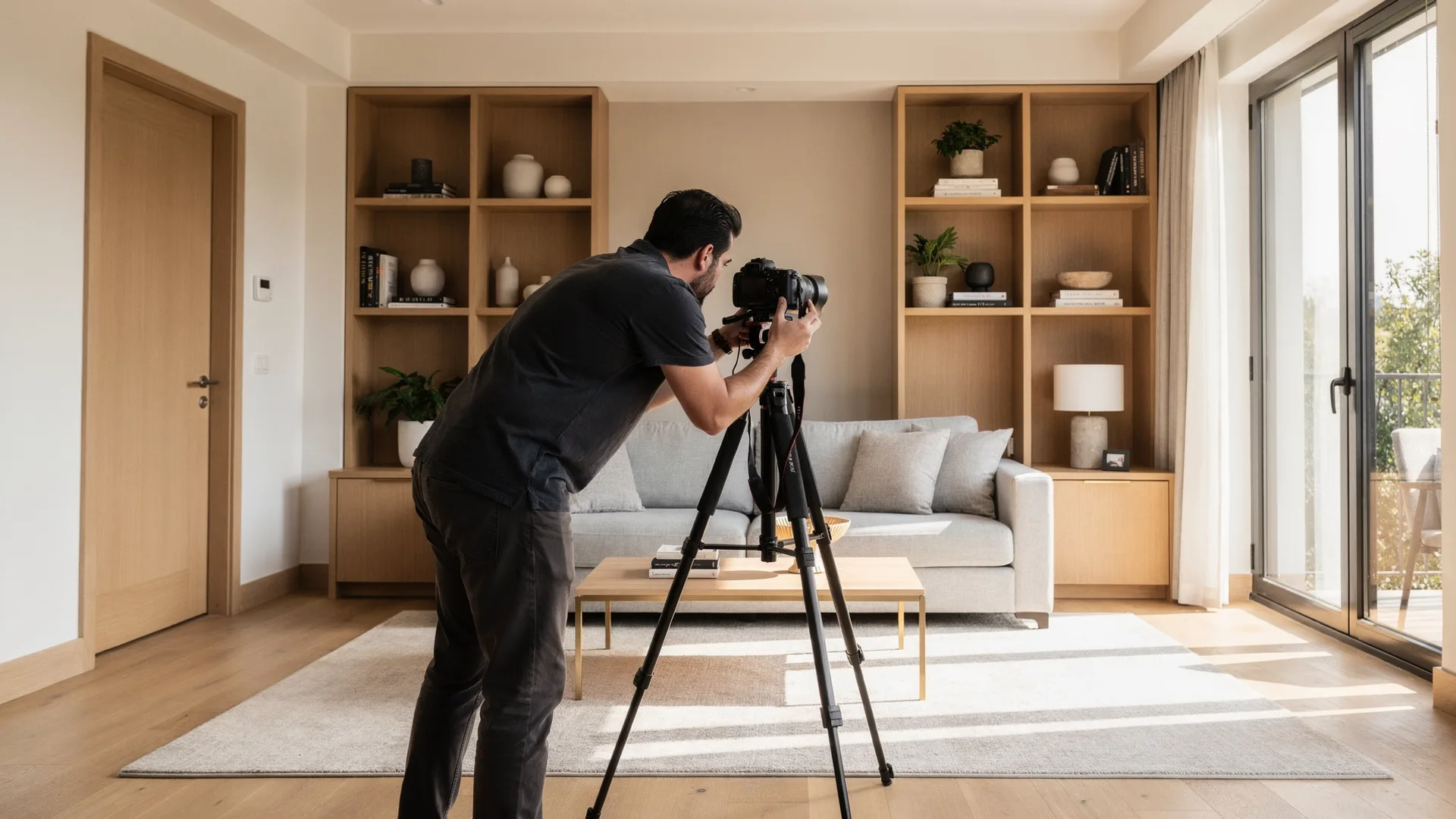
Hosts do not fear better photos. They fear better photos that turn into accuracy complaints. If you've been putting off a professional shoot, be honest about why: it isn't the money. It's the quiet suspicion that a photographer will make your place look too good — and that "too good" is a loan against the guest's first ninety seconds in the door, with interest due in the review. You've seen the horror-story version in host forums: bookings jump after the shoot, and then the cancellations start, and the word "cozy" begins appearing in reviews in a tone that is not a compliment.
The pattern behind those stories is almost never fraud. It's usually a lens. A 16mm wide-angle is standard in real estate photography and technically accurate — it captures more of the room in frame without adding anything that isn't there. But a 320-square-foot studio shot wide looks, to an untrained eye, considerably larger than it is. The guest wasn't lied to. They were shown something true, framed in a way that quietly overpromised, and the gap between the photo and the room becomes the first thing they notice, before they've set down their bags. Nobody meant to build a trap. The host just watched guests walk into one anyway.
So you're stuck between two fears that feel like opposites: photos so honest they're invisible, or photos so good they're a liability. Here's the thing this article exists to tell you — that's a false choice. Desire and accuracy are not enemies. They just have to be managed in the same shoot, deliberately, which almost nobody briefs a photographer to do. Better listing photos are the middle path when the only problem is light: the room stays put. Keep reading and you'll know exactly how. The ground rules for home hosts are the accuracy line, Airbnb's free photography offer is invitation-only if a shoot email shows up, and the guide to helping a listing stand out still begins with the photos.
Two Different Failure Modes, Same Root Cause
Professional photography and honesty aren't opposites, but they can drift apart in specific, predictable ways, and it's worth naming them separately. Over-styled photos create desire that the arrival can't sustain — a guest walks in and the gap between the photo and the room becomes the first thing they notice, before they've even set down their bags. Under-lit, amateur photos do the opposite: they suppress desire the property has actually earned, so fewer guests ever book at all. Both are honesty problems, just pointed in opposite directions.
The Trust You Spend Before A Guest Even Arrives
There's a resource every listing has that doesn't show up on a P&L: guest trust, extended in advance, before a single interaction has happened. A guest who books based on photos is making a small leap of faith that what they see is roughly what they'll get. Every time that leap turns out to be wrong — even for something as defensible as a standard wide-angle lens — the guest recalibrates, and not just about your listing. They become a slightly more skeptical shopper the next time, more prone to reading reviews for scale complaints, more likely to cancel at the first sign of a mismatch rather than giving the space a chance.
That recalibration is the real cost of an overpromise, and it's steeper than a single cancellation. A guest who feels mildly misled rarely says so directly in a five-star system that discourages harsh public feedback. They just quietly stop trusting photos as a category, and no amount of technically-accurate lens work earns that trust back on the next booking.
The wide-angle problem sits closer to the first category. Nothing in the photos is fabricated — no rooms cloned, no furniture that doesn't exist, no editing that changes the actual layout. But the lens choice creates an expectation the square footage can't meet, and cancellations before arrival are one of the more expensive ways to learn that lesson, because they cost you the booking and the review both.
Why Guests Rarely Say What Actually Bothered Them
You will almost never get a message saying "this felt smaller than the photos suggested." You get cancellations with vague reasons attached, or no reason at all, and a handful of reviews that mention "cozy" in a tone that reads more like a euphemism than a compliment once you look closely. Guests rarely file a formal complaint about a mismatch this subtle — they just quietly downgrade their trust and move on, which means a host can go a long time genuinely unaware that the photos are the source of the friction, because nobody ever says so directly.
What Honest-But-Professional Actually Looks Like
The goal isn't to choose between polish and honesty, it's to hold both at once, and that's a specific, learnable set of choices rather than a vague ideal. Wide-angle shots for genuinely spacious rooms, standard lenses for smaller ones. Styling that reflects what's actually in the space during a stay, not a one-time staging that gets removed the next morning. Captions or a floor plan that gives guests an accurate sense of scale alongside the flattering image, so the photo and the reality are working from the same set of facts.
This is the same tension underneath Your Airbnb May Not Be Broken — the idea that a listing's photos are doing real, measurable work shaping guest expectations, for better or worse, and that work needs to be managed deliberately rather than left to whatever a lens defaults to.
Auditing Your Photos for Both Problems at Once
Check for both overselling and underselling
- Ask someone who has never seen the property to estimate its square footage from the photos alone, and compare their guess to the real number.
- Review whether any wide-angle shot creates a sense of scale a guest could reasonably feel misled by on arrival.
- Check that styling in the photos — furniture, décor, staging — matches what guests will actually find during their stay, not a one-time setup.
- Confirm your listing includes accurate square footage or a floor plan alongside the photos, so scale isn't left entirely to the lens.
- Separately check your gallery for underselling — dark, amateur, or outdated shots that undersell a space that's actually better than it looks.
- Ask two or three past guests, if you can, whether the space matched what they expected from the photos, and take the answer seriously either direction.
Briefing A Photographer To Protect Both Goals
If you're hiring help, say the quiet part out loud before the shoot: you want photos that make the space desirable and that a guest would still recognize the moment they walk in. Most photographers have never been asked for that combination explicitly — they've been asked for beautiful, or asked for fast, but rarely asked to hold accuracy as a co-equal goal. Naming it upfront changes lens choices, staging choices, and editing choices in ways a generic booking brief never will.
The repair, when hosts find themselves on the wrong side of this, is rarely dramatic: keep the professional shoot, reshoot the main room on a standard lens, add a floor plan so scale stops being the lens's job. Cancellations settle, bookings hold. The lesson isn't that professional photography is dangerous. It's that the choices inside a professional shoot — lens, staging, framing — carry the same responsibility toward accuracy that any honest photo does, and a good photographer without that context will optimize for beautiful over true every time, because nobody told them not to.
Published May 23, 2026 / 6 min
Related Reading
How to Make Your Photos Match Your Real Place in One Weekend Without Remodeling
It feels good when guests say it looks better in person. It may also mean the listing undersold you.
May 30, 2026
6 min
How to Brighten Dark Airbnb Photos in One Sitting Without a Full Reshoot
A dark photo can make a clean home feel old, cold, cramped, or forgotten.
May 27, 2026
7 min
How to Fix Your First Five Airbnb Photos Tonight Without Hiring a Photographer
Your 27th photo can't rescue a weak first impression.
June 3, 2026
6 min