How to Check If Your Photos Make a Good Airbnb Look Worse Without Blaming the House
My place is good. Guests would love it if they actually booked it. So why is the calendar empty?
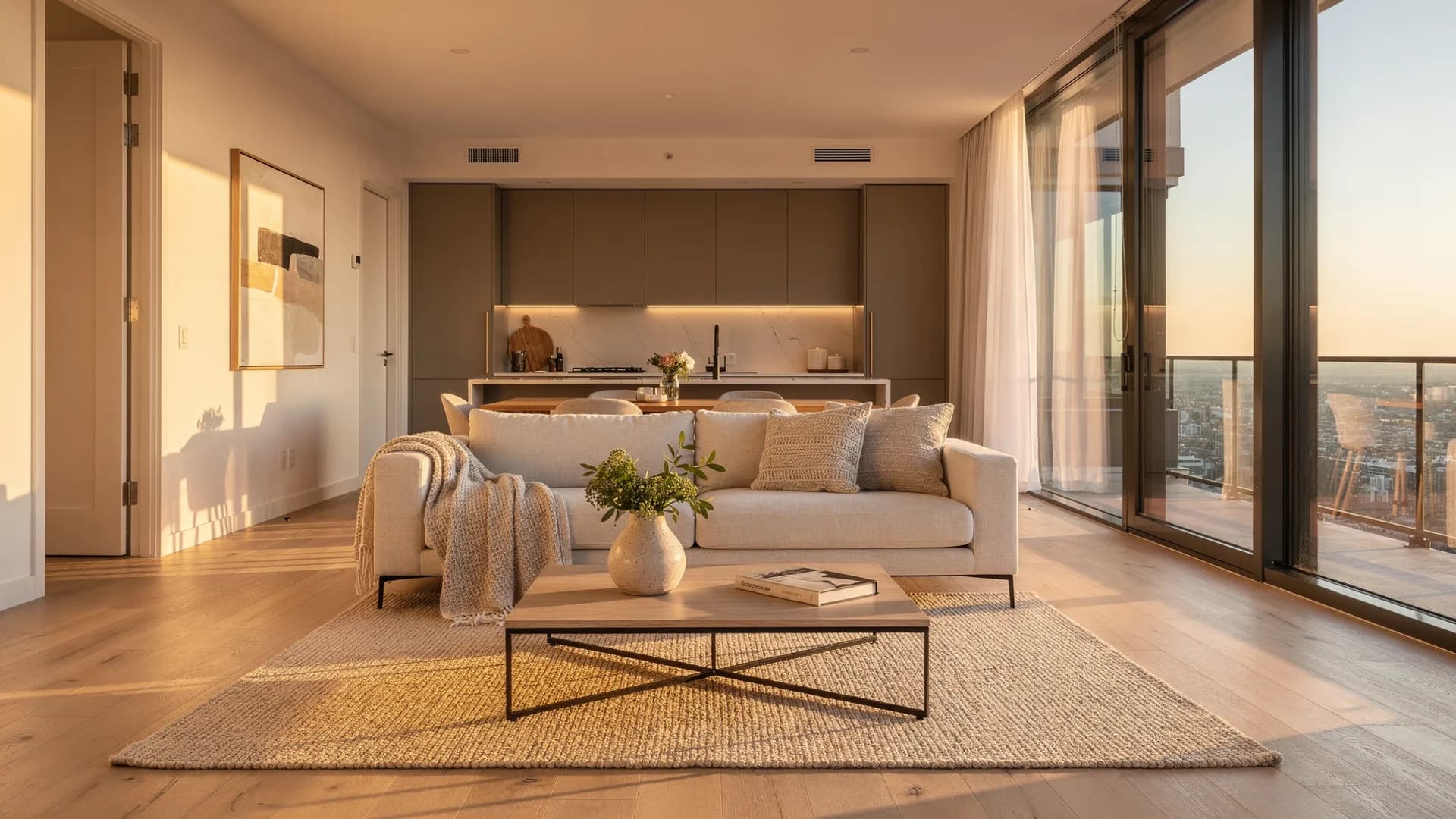
The calendar is not just empty. It is accusing you. Every open night has a voice now, and the voice keeps asking what you did wrong — as if the quilt you folded at the foot of the bed, the paperbacks you picked out one at a time, the grout you scrubbed on your knees at midnight before your first guest ever arrived all count for nothing, because a stranger in another city flicked a thumb past your thumbnail without slowing down.
Here is the part you would not say at a dinner party: you have started walking through your own property like a detective looking for the flaw. You stand in the doorway with your phone in your hand and you try to see the place cold — the light through the kitchen window, the way the whole apartment seems to exhale when the door opens — and you think, honestly, this is good. You know it is good. The guests who actually stay tell you it is good. Then you open the app, and the next eighteen days hold exactly one reservation, and for one ugly second you wonder if you are the only person alive who can see what you built.
You are not delusional, and you are probably not wrong about the property. What you are up against has a name: The Invisible Listing. It is the version of your place that actually competes for bookings — not the rooms, but the rectangle. A handful of photos on a small screen, judged in seconds by tired people scrolling in bed, stacked against forty other rectangles on the same results page. If that rectangle is only failing because the light is flat, better listing photos can correct it without restaging the room. Somewhere between the real home and that rectangle, something is getting lost. The calendar is not measuring your home. It is measuring the loss. Airbnb's page on how search results work describes the guest side of that scroll, and its guide to helping a listing stand out starts with compelling photos. Listing accuracy, including what those photos may show, is in the ground rules for home hosts.
That distinction is the whole reason to keep reading. Because the instinct, when the silence stretches, is to put the entire enterprise on trial — the neighborhood, the price, your taste, the decision to host at all. And almost nobody stops to check the one narrow, fixable layer that sits between a good property and a quiet calendar before handing down the verdict.
The Gap Between the Property and the Pace
Hosts tend to measure their business in one number: nights booked. It is an honest number, but it is also a lagging one. It tells you the outcome of a hundred small decisions guests made in the space of a few seconds, without telling you which decision went wrong. A slow calendar can mean the market softened. It can also mean a competitor two streets over has a brighter cover photo and nothing else going for them — and that possibility should make you angry in a useful way, because it is the one you can do something about this week.
A calendar gap is a symptom with dozens of possible causes, and most of them live on the surface, not in the foundations. But slow bookings do not stay politely on the calendar. They follow you into the grocery store, the mortgage payment, the cleaner's invoice, and the quiet little question you do not want to say out loud: did I screw this up? Under that kind of pressure, the mind reaches for the biggest available explanation, not the most likely one.
What A Guest Actually Judges In The First Few Seconds
Nobody evaluates a listing the way a host evaluates their own home — slowly, room by room, with context and memory attached to every choice. A guest scrolling on a phone is triaging. They register the cover image, glance at the price, skim the second photo, and either keep going or move on. That triage happens before they have read a single sentence of the description you spent an hour writing.
The signals guests react to fastest are almost entirely visual and almost entirely about trust: does this photo look like it was taken with care, does the space look bright and specific rather than generic, does the price feel proportionate to what's shown. None of that requires them to understand your renovation story or your five-star history. It requires the first screen to do its job.
Where The Signal Actually Breaks
Here is the version of this that hides in plain sight, over and over: a strong property wearing a weak signal. The cover photo is a wide shot taken at midday with flat, shadowless light — technically fine, emotionally nothing. The third photo is a bathroom sink, useful information but not a reason to keep scrolling. And the photo that would actually sell the space — the reading nook with afternoon light pouring across the floor, the one room that made you buy the place — sits at position eleven, where almost nobody has ever seen it. By photo three, the guest has already decided this listing is unremarkable and moved on, and they are wrong, and they will never know they are wrong.
This is the pattern worth checking before anything else changes: not whether the property is good, but whether the sequence of images a guest sees in the first five seconds earns the next five seconds. A beautiful home with a flat cover photo will lose to an average home with a photo that stops the scroll, every time, because guests can only book what they can see.
The Test Before The Bigger Decision
Run this before you touch price, title, or amenities
- 1Open your own listing on a phone, cold, as if you'd never seen it — do not scroll past the cover photo without judging it as a stranger would.
- 2Pull up three nearby competitors at a similar price and put your cover photo next to theirs. Would you click yours first?
- 3Look at your first five photos as a sequence, not individually. Do they orient a stranger to the space in order: arrival, best room, sleeping setup, bathroom, one memorable detail?
- 4Check whether your brightest, most specific room is buried past photo six or seven, where most guests never scroll.
- 5Read your title as if you had never written it. Does it say something a competitor's title doesn't, or is it interchangeable with fifty others nearby?
- 6Write down one honest sentence describing what a rushed guest currently concludes about your listing in five seconds — then decide if that conclusion is fair to the actual property.
None of this requires a renovation, a price cut, or a new strategy. It requires treating the first screen with the same seriousness you'd give a for-sale sign, because that's functionally what it is.
If this is your contradiction — a property you're proud of, a calendar that doesn't reflect it — rule out the visible layer before you conclude anything larger. The companion piece, Your Airbnb May Not Be Broken, walks through exactly how to tell the difference between a property problem and a presentation problem, which is a much calmer question to sit with than "should I quit."
Guests cannot book the value they cannot see.
That's not a marketing line. It's the mechanical reality of how booking decisions get made in under ten seconds on a small screen. Fix what's visible first. Everything else is easier to diagnose once that layer is no longer in the way.
Published July 2, 2026 / 7 min
Related Reading
How to Tell If Guests Hate Your First Photo Without Quitting the Listing
Before you decide the market is dead, check the version of your place guests are actually judging.
June 18, 2026
6 min
How to Find Why People View Your Airbnb but Don’t Book Without Cutting Your Price First
People are seeing your listing. The harder question is why they leave.
June 25, 2026
7 min
How to Stop an Empty Calendar in One Week Without Changing Price, Title, and Photos at the Same Time
Checking turns into comparing, tweaking, discounting, and wondering whether you made a mistake.
June 21, 2026
7 min