The Guest Favorite Illusion
Airbnb says my listing is a Guest Favorite. Guests still are not booking it.

A badge can tell guests you were loved before. It cannot make them click if the listing feels invisible now. Go look at what the Guest Favorite ribbon actually is, physically, on a search results page: a sliver of icon in the corner of a thumbnail, smaller than a fingernail, sitting on top of whatever cover photo you chose two years ago. If that cover is only dim, better listing photos can update the light without a new shoot. That is the entire billboard. Top ten percent of homes on the platform, compressed into a speck that a stranger's thumb travels past in under a second. Airbnb describes how search results work, points hosts who want the listing to stand out toward compelling photos, and explains reviews for homes as the record the badge is summarizing.
The email felt bigger than that. When the recognition landed, you forwarded it to somebody — a sister, a partner, the group chat — and for about twenty minutes the whole gamble felt externally validated: the reviews, the little touches, the years of showing up, certified by the platform itself. Then at some point you did the other math. Six weeks of upcoming calendar. A handful of nights booked. And a quiet, embarrassing question you have not typed anywhere: if my place is officially one of the best, why does it feel like nobody is even looking at it?
Call the enemy what it is: the Mislabeled Problem. The badge measures the stay. The calendar measures the scroll. Those are two different exams, graded by two different judges — one by guests who already stayed and loved it, the other by strangers triaging forty thumbnails with one thumb while half-watching television. A listing can genuinely ace the first exam and quietly flunk the second for years, and the ribbon will keep renewing the whole time, because nothing about a weak thumbnail ever shows up in ratings, reviews, or reliability. The badge is not lying to you. It is answering a question nobody on the search results page is asking.
Which means the fix is not to trust the recognition less. It is to stop letting it stand in for an audit of the one layer it has never measured — the few seconds where a stranger decides whether your place is worth a tap at all.
A Quality Signal, Not a Demand Signal
Guest Favorite is calculated from ratings, review volume, and reliability metrics — it's a retrospective quality signal, built entirely from what past guests experienced and reported after the fact. It answers a narrow, useful question: was this stay good. It does not answer a completely different question, which is whether a new guest, scrolling a results page with forty other options open in other tabs, will choose to click on your listing over the next one down. Quality and visibility are related, but they are not the same system, and Airbnb has never claimed otherwise — hosts just tend to hear 'favorite' and assume it means 'chosen.'
This distinction matters because it changes what you troubleshoot. If your problem were quality, the guests who did book would be leaving lukewarm reviews or specific complaints. Read your own last ten and be honest about what's there: if they're genuinely warm — a few even mentioning the place has already been recommended to friends — then the listing is not underperforming on the stay. It is underperforming on the scroll, which is a different stage of the funnel entirely, governed by a completely different set of decisions than the ones the badge was ever measuring.
There's also a threshold effect worth understanding: Guest Favorite status is recalculated periodically from a rolling window of past performance, which means it can sit unchanged on a listing for weeks even while that listing's search visibility is quietly sliding for entirely unrelated reasons. A host watching the badge stay put naturally assumes the underlying performance is stable too. It isn't necessarily. The badge and the booking pace are measuring different windows of time, updated on different schedules, which is exactly the kind of mismatch that makes an empty calendar feel so confusing next to a shiny new ribbon.
Where a Well-Reviewed Listing Still Loses
A crowded search results page is a merciless environment for even a genuinely excellent property. Guests are triaging dozens of thumbnails in the time it takes to glance at a phone twice, and the badge itself renders as a small ribbon in the corner of the cover photo — easy to miss, easier to ignore if the photo underneath it isn't doing its own job. A flat, underlit, or oddly cropped cover image will lose the click to a brighter, more specific one, badge or no badge, because guests are reacting to the whole thumbnail, not parsing which icon is stamped on it.
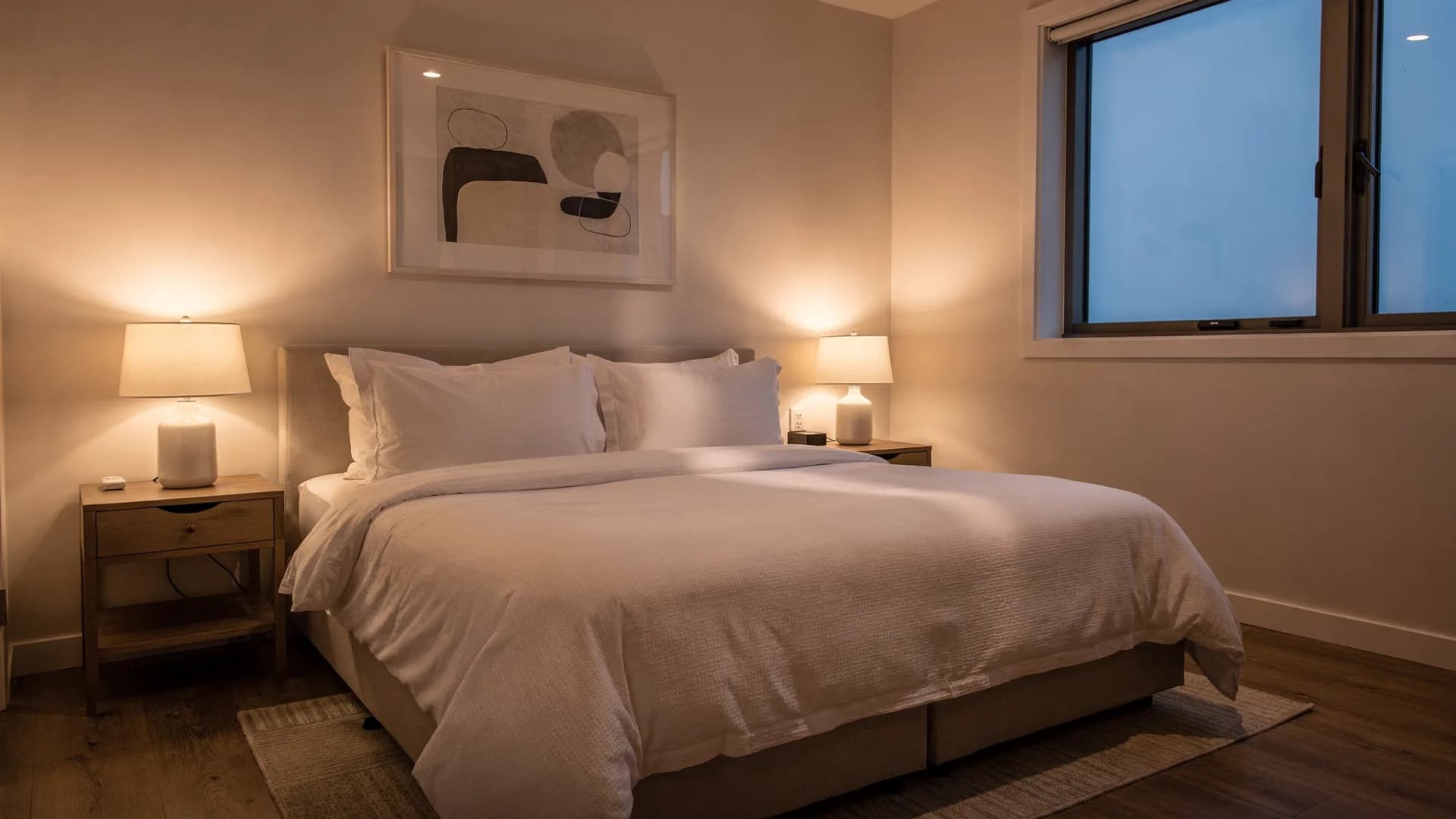
Now open your own photo sequence and look at what the ribbon is actually sitting on. The pattern among well-reviewed, underbooked listings is remarkably consistent: a cover shot that is moody, a little dark, technically accurate, and visually unremarkable next to competitors leading with sunlit interiors — a dusk exterior, a wide flat living room, the photo a host is proud of rather than the photo a stranger would tap. The badge sits on top of that image doing nothing to compensate for a first impression that isn't earning the next four seconds of attention, no matter how many warm reviews wait a few taps further in. The mechanics of why guests decide this fast, and what they're actually reacting to, are worth reading in full if this gap between quality and bookings sounds familiar.
Auditing Past the Badge
The fix isn't to distrust the recognition — the reviews were earned, and the badge accurately reflects that. The fix is to stop treating the badge as a substitute for auditing the parts of the listing that control whether a guest ever gets far enough to read those reviews at all. A ribbon icon, however deserved, cannot compensate for a cover photo that loses the scroll before a guest has any chance to discover what past guests actually thought.
Steps for auditing a well-reviewed listing that still isn't booking
- Open your listing at thumbnail size, the way it actually appears in search results, and judge only what's visible at that scale.
- Confirm your cover photo is your brightest, most specific image — not necessarily the one you personally love most, but the one a stranger would click first.
- Read your last ten reviews specifically for complaints about accuracy or expectations, since that would point to a quality issue rather than a visibility one.
- Compare your price and photo sequence directly against two or three nearby Guest Favorite listings that are booking well, and note what's different.
- Check whether your title mentions anything concrete and searchable, or whether it's generic enough to blend into a wall of similar listings.
- If the reviews are strong and the photos are weak, prioritize a photo refresh before touching price — you likely have a click problem, not a value problem.
The repair, for listings in this exact spot, is usually humble: move a sunlit interior shot to the front, and let the moody exterior work as atmosphere further down the sequence instead of serving as the first handshake. Hosts who make that one change often find that within a few weeks the same badge, the same reviews, and the same property are booking at a pace that finally matches what the ribbon was claiming all along. The recognition doesn't change. What changes is giving strangers an actual reason to stay on the page long enough to find it.
Published May 11, 2026 / 6 min
Related Reading

How to Fix an Empty Calendar When You’re Still a Superhost Without Trusting the Badge Alone
A badge proves what you did last quarter. It does not vote on what a stranger clicks tonight.
May 15, 2026
6 min
How to Stop an Empty Calendar in One Week Without Changing Price, Title, and Photos at the Same Time
Checking turns into comparing, tweaking, discounting, and wondering whether you made a mistake.
June 21, 2026
7 min

How to Check If Your Cover Photo Wins the Click in One Minute Without Paying for New Photos
Guests don't reject your whole property first. They reject a thumbnail.
June 6, 2026
6 min